The $590.4 million award is real, but the $4.75 million spread across per-lander prices is the diagnostic: three primes appear to know the same parts, shops, and price.
02 The SDA Tranche 1 Transport Layer launch window opens 30 August.Twenty-one Northrop-built satellites from Vandenberg SLC-4E make the mesh cadence, rather than a single satellite, the production signal.
03 ESSCA II is now a closed reference, not a live invitation.The closing status matters because the next sub-tier position will not wait for a quarterly review cycle.
04 NASA’s Phase 2 commercial LEO stations RFP is out.Prime teams and their sub-tier are being priced for habitable volume by 2031, before the supplier list is public.
05 ABACORP is the first named shop against the LEIA machined-metallic slice.The Moorpark shop covers a specific, certified slice of the list; this paper is not pretending that a qualified machined interface is a dome, a hypergolic engine, or radiation-hardened electronics.
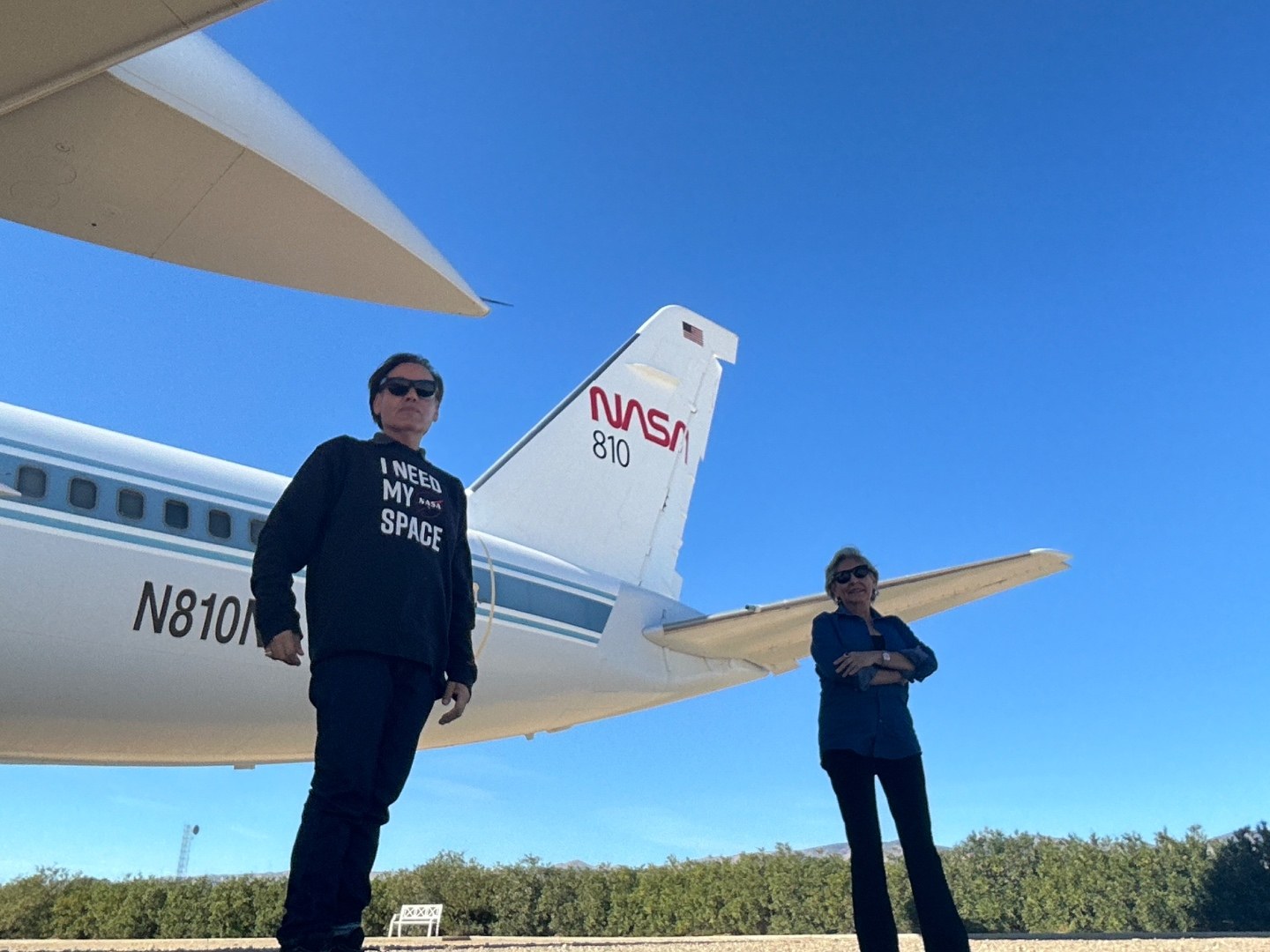
Notes from the co-founders
A lunar lander needs cast titanium, machined aluminum, radiation-hardened silicon, and a person cleared to work on it. None of the four is a software problem — and that’s the whole trouble with the number everyone is talking about.
Consider CLPS 2.0, the second competitive round of NASA’s Commercial Lunar Payload Services program — a $590 million set of task-order awards that landed on 30 June and required each of the three winning primes to price a full commercial lunar lander, integrated and delivered, against a NASA-published constraint list of parts and processes the government itself has flagged as scarce. $590 million is a serious number. It is the ceiling on what the three winning primes can bill NASA between now and 2028, and it is what put CLPS 2.0 on the front page of the trades. There is a second number in the same award, though, that tells you what the first one can’t: 3.3 percent, the spread across the three per-lander prices. On a mission class that has flown exactly four times, two of them failures, three independently-bid landers came in within a $4.75 million band on prices of roughly $145 million apiece. The dollar figure tells you how big the program is. The spread tells you the market has already decided who is going to build it.
The three lines that got us there: Astrobotic $297.9M for two landers, Firefly $144.2M for one, Intuitive Machines up to $148.3M for one — all on solicitation 80JSC026R0015 out of NASA Johnson. To feel the size of that number, look at the same competition in May 2019. CLPS 1.0’s first head-to-head task orders came in at $77M, $79.5M, and $97M — a 26 percent spread, a market discovering a price on a mission nobody had flown before. The program then ran 35 to 49 percent cost growth and roughly 28 months of schedule slippage per task order, per NASA’s own Inspector General. That is normal. 3.3 percent is not normal. 3.3 percent is the market saying we know the parts, we know the shops, and we know the price.
The industrial base seems to be rewarding the small number of shops that did the qualification work five years ago. The prices are that close because the parts are the same parts, coming from the same suppliers, priced by the same lead engineers, who have been holding the American lunar program together since 2019. In a perhaps contrarian view, it is time to reevaluate that five-year plan. Look past the next quarter and the next twelve months, and start pricing the next five years and beyond — because the primes already are.
Who this matters to: every CNC shop, wire-harness house, RF electronics lab, and Class-10K clean room in California that thought CLPS 2.0 was a doorway. It isn’t. The door on those three teams closed 30 June. What’s open is what gets built after 2028 — the sub-tier that replaces the current one when the current shops fail, retire, or get bought. The primes are pricing that next sub-tier now, on second-source qualifications they’re running in parallel to the flights they’ve already sold to Johnson. If your shop is in that qualification pipeline you already know it. If it isn’t, you have about eighteen months to get there before the primes fix the pricing on the next round the same way they fixed it on this one.
The Space Observer will name — issue by issue, prime by prime — the parts the second sub-tier is being built to make. Start with this issue.
008 · Firefly · propellant tank domes. Firefly’s Blue Ghost lander needs spun and welded domes in the 1.2 to 1.8 meter class. NASA’s LEIA constraint list named the category in writing. Three California shops can quote it; one has flown it. The named shop is on the cluster roster. The other two are not.
One capability card, from every member company, to Diego F. Padilla at diego@rakarinc.com, by Friday, 15 August 2026, 5:00 p.m. PT. One page: certifications held with expiry dates, processes performed in-house, maximum part envelope, current lead time, and one named federal agency or prime contractor for which you are already an approved supplier. No brochure, no capabilities deck, no company history.
Cards received before the monthly AMA are reviewed on that call; cards arriving after it are worked in the cycle that follows. They are read against the solicitation language in Standing Watch, and where a relevant and consenting contact exists the cluster offers a named introduction. Cards not received are not matched. That is the entire mechanism.
The 3.3 percent
CLPS 2.0’s $590.4 million award is a real ceiling on current lunar work. The diagnostic is the narrower number: three independently bid landers priced within a 3.3 percent spread against a $10 billion ceiling that can rise to $15 billion, which suggests a settled input market rather than a settled technology.
ONE Astrobotic, Firefly, and Intuitive Machines priced their per-lander awards within a $4.75 million band. The figure is not proof of collusion, nor is it proof that lunar landing has become routine.
TWO The 2019 CLPS task orders carried a 26 percent spread, and NASA’s Inspector General later recorded cost growth and schedule slippage across the program. A tighter price is a different signal from a lower mission risk.
THREE The primes seem to be rewarding the shops that completed qualification work years earlier. Second-source positions for the work after 2028 are the relevant opening for suppliers not already on the current teams.
FOUR The three primes are not the same company. Firefly, Intuitive Machines, and Voyager’s newly acquired Astrobotic carry different margins, backlogs, ownership structures, and sub-tier risks beneath similar prices.
FIVE NASA’s LEIA list remains the visible index of bottlenecks: domes, valves, hypergolics, bespoke welding, heat pipes, and radiation-hardened electronics. ABACORP is named here only against a machined-metallic slice of that index.
The task is not to romanticize a $590 million award or dismiss it. The task is to read the 3.3 percent for what it seems to be: evidence that qualification, capacity, and pricing power have already concentrated below the primes.
The 3.3 percent
A pricing story from NASA Johnson, 30 June 2026 — and what it tells California’s sub-tier about the next four years.
One — the room
At 4:47 p.m. Central on 30 June, NASA’s Office of Procurement at Johnson Space Center posted three task-order awards under solicitation 80JSC026R0015 — the second competitive round of Commercial Lunar Payload Services. The contracting officer was Joshua D. Smith; the contract specialist, Huyen Nguyen; the Source Selection Authority, Ryan Stephan out of Glenn. The CLPS program lead at Johnson is Adam Schlesinger. Every name in this paragraph has a phone number in the government’s public directory.
Three primes won. Astrobotic took two landers at $297.9 million. Firefly took one at $144.2 million. Intuitive Machines took one at up to $148.3 million. Total not-to-exceed: $590.4 million against a $10 billion program ceiling that can grow to $15 billion if NASA extends the ordering period.
Every mainstream outlet led with the $590 million. That is not the story.
Two — the number
The story is the spread across per-lander prices. Astrobotic priced its lander at $148.95M. Firefly at $144.2M. Intuitive Machines up to $148.3M. Three independently-bid landers, built by three competitors, priced within a $4.75 million band on a mission class that has flown exactly four times, two of them failures. That is not what price discovery looks like. That is what a settled market looks like.
How settled? Look at the last time these same three primes bid the same competition. In May 2019, NASA awarded the first CLPS task orders — Astrobotic at $79.5M, Intuitive Machines at $77M, OrbitBeyond at $97M. A 26 percent spread. A market discovering a price on a mission nobody had flown. The program then ran, per NASA’s own Inspector General, 35 to 49 percent cost growth and 28 months of schedule slippage per task order. Normal, for an unflown market. 3.3 percent is not normal. Three points three percent is a market that has decided it knows the parts, the shops, and the price.
Three — what the number could mean
A 3.3 percent spread is a big finding and a small one at the same time. It is worth walking through what it could mean before deciding what it does.
One reading is that the primes now know the cost, because the sub-tier that builds a CLPS-class lander has quoted the parts before and NASA has published, through its LEIA constraint list, the categories where it sees a bottleneck. Three companies reading the same parts list from the same shops arrive at the same number without a phone call. This is what a settled input market looks like from the outside.
A second reading is that NASA signaled a target. CLPS 2.0 is firm-fixed-price task-order-driven, and Johnson’s procurement office had six years of CLPS 1.0 cost history to draw from. If the source selection was weighted heavily on non-price factors — past performance, mission risk, LEIA-list capability — three offerors would rationally converge on the price they thought would win, not the price they thought would maximize margin. That is a bid artifact, not a market fact.
A third reading is information asymmetry among the primes. They read each other’s SEC filings. They hire each other’s supply-chain managers. They quote from the same ten to fifteen sub-tier shops, most of them in California. It is possible to converge on a price without collusion in the legal sense and without a shared parts list, simply by being three companies who know the same suppliers cold.
A fourth reading is that the primes are pricing to loss on the base task orders and betting on change orders, on follow-on CLPS 3.0 awards, or on adjacent commercial lunar business that the CLPS platform creates. CLPS 1.0 grew 26 percent on average and 62 percent at the top. If the same growth rate applies to CLPS 2.0, the base $145 million is a foothold and the real revenue is what NASA adds later. That is a rational bidding strategy in an oligopoly with switching costs.
The four readings are not mutually exclusive. All four are probably partly true. What they collectively rule out is the mainstream reading — that a 26 percent spread narrowing to 3.3 percent is evidence the industry has grown up. It is not. CLPS 1.0 flew four times and two of those flights failed on or before landing. A settled price is not a settled technology. It is a settled input market and a settled bidding posture. The next lander that tips over will tip over at a known price.
Four — the primes are not the same company
This is the part the $590 million number hides. The three primes that priced within 3.3 percent of each other are running three different businesses.
Firefly is publicly traded on Nasdaq (FLY), posted $80.9 million in Q1 2026 revenue at a 21.6 percent gross margin, and is fielding 225 open positions worldwide including a hiring event at its Briggs, Texas facility. Its one CLPS 1.0 flight, Blue Ghost 1, landed nominally. Its cost growth on that task order was 9 percent, an outlier in the CLPS 1.0 portfolio. Firefly is the closest of the three to what a healthy production prime looks like.
Intuitive Machines is publicly traded on Nasdaq (LUNR), posted $186.7 million in Q1 2026 revenue at a 16.1 percent gross margin, and is carrying a $1.1 billion backlog after acquiring Lanteris in January 2026. Both of its CLPS 1.0 landings — Odysseus in February 2024 and Athena in March 2025 — touched down but tipped over. It is actively hiring in Houston, including assembly and integration engineers on the CLPS line. Intuitive Machines is trading margin for backlog, and its Kinetics segment is doing most of the margin work.
Astrobotic is no longer independent. Voyager Technologies (NYSE: VOYG) closed its acquisition of Astrobotic on 13 July 2026, thirteen days after the CLPS 2.0 award. Total potential enterprise value: approximately $300 million, of which $171 million is upfront cash and stock and $129 million is performance-based earnouts. Voyager projects Astrobotic will contribute $60 to $70 million in full-year 2026 revenue. Astrobotic’s CLPS 1.0 record: Peregrine failed in flight in February 2024, and the Griffin/VIPER task order was cancelled after 62 percent cost growth. Astrobotic’s two-flight $297.9 million award is now Voyager’s two-flight $297.9 million award, priced against a supply chain and a management team Voyager has owned for less than a month.
Same price. Three different companies. Three different risk profiles for anyone in the sub-tier.
Five — what compressed the spread
Three things, all of them procurement facts, none of them software.
First, the parts are the same parts. The propellant tanks, the star trackers, the reaction wheels, the throttleable engines, the landing radars, the harnesses that carry current across a lander pressure vessel — every prime is buying most of these from the same ten to fifteen sub-tier shops, most of them in California, one of them in Ventura County. The lead engineer who prices a propellant tank dome at Firefly used to price it at Astrobotic. He priced it the same way both times, because it is the same dome.
Second, NASA’s LEIA constraint list — the Lunar Exploration Industrial Architecture document the agency published in 2024 through its Moon Base supply-chain RFI — named the parts categories where the government sees a supply-base bottleneck. Propellant tank domes. Isolation and control valves. High-thrust hypergolic engines. Large-scale bespoke welding. Heat pipes. Radiation-hardened electronics. Every offeror on CLPS 2.0 was pricing against that document. The primes were not guessing at each other’s costs. They were reading the same government-published constraint list and pricing to the same categories.
Third, the primes have been running second-source qualifications in parallel to the flights they have already sold. The task orders that reach Johnson in the next quarter will be built on the current sub-tier; the task orders that reach Johnson in 2027 and 2028 will be built on a sub-tier that is being qualified right now.
Six — what happens next
The primes have priced CLPS 2.0. The task orders will flow. The 2028 flights will be built out of the current sub-tier — a handful of shops, most of them West Coast, that did the qualification work between 2019 and 2024. Those shops are, right now, running at somewhere between 85 and 110 percent of nameplate capacity, depending on how you count second-shift and how honestly you count scrap.
What is open is what gets built after 2028. The primes are pricing that next sub-tier now, on second-source qualifications that started in 2024, are running through 2026 and 2027, and will finish in time for the next round of CLPS task orders. If your shop is in that qualification pipeline you already know it. If you are not, you have roughly eighteen months.
Seven — what the cluster is doing about it
This paper is not a neutral scan of the space economy. It is an outlier-selection instrument. A small number of missions carry most of the economic value in aerospace, and a small number of suppliers determine whether those missions ship. The Space Observer names them — mission by mission, prime by prime, part by part — and the cluster works the introductions the naming makes possible. Between now and the September AMA on Tuesday, 1 September 2026, this is what is on the desk:
- Firefly · propellant tank domes. Blue Ghost needs spun and welded aluminum domes in the 1.2 to 1.8 meter class, per LEIA. Three California shops can quote it, one has flown it, and the named shop is already on the roster. The other two are not. The cluster is opening a written line to Firefly’s supply-chain team on the two unnamed shops before 8 September.
- Intuitive Machines · Houston hiring. Intuitive Machines is actively hiring assembly and integration engineers in Houston who spent their careers in California. The cluster is compiling a short list of California-based sub-tier quality and production engineers who want the West Coast to keep the work rather than lose it to Texas. Introductions on request.
- Voyager/Astrobotic · supply-chain audit. Voyager acquired a two-flight, $297.9 million CLPS 2.0 award and Astrobotic’s existing supply base in the same month. Its Q3 disclosure will name the parts categories it needs to second-source. The cluster is reading Voyager’s 10-Q on the day it drops and matching the named categories to member capability that same week.
- The paper. Every issue of The Space Observer will name a prime and a part — not speculatively, from the LEIA list and the primes’ own supplier bulletins. 008 · Firefly · propellant tank domes. 009 will be named next Saturday.
SpaceReturn turns fragmented aerospace capabilities into mission-configured industrial organizations. The paper publishes what the missions need and what the capabilities are, each Saturday. Terms are per mission and are discussed with the co-founders directly.
FIELD SIGNAL / QUALITY ENGINEERING“The parts that decide whether a lander flies are not the parts anyone is writing about. They are the parts that were qualified five years ago in a shop that hasn’t moved, by a lead engineer who is still on the floor, priced against a bill of material the prime already knows how to read.”
— FROM THE WORKING NOTES OF A CALIFORNIA SUB-TIER QUALITY ENGINEER, TRANSCRIBED ON THE RECORD FOR THE SPACE OBSERVER · WEEK OF 1 AUGUST 2026
Teaming Desk
The Teaming Desk is not a directory. Theresa Padilla-Chaparro and Diego F. Padilla read capability cards against an active instrument’s named part, certification, and delivery date. This week the Desk names ABACORP only against the machined-metallic slice of NASA’s LEIA index.
Sought — propellant tank dome manufacturing. Large-diameter forming, spin-forming or hydroforming, weld preparation, and dimensional verification of dome sections remain unfilled on this page.
Sought — isolation and control valves, and actuators. Valve bodies, seats, poppets, actuator housings, cleanliness, and leak-rate verification are the relevant machined-metallic slice.
Sought — high-thrust hypergolic engine components. Injector work, chamber and nozzle machining, and material compatibility remain distinct from attitude and reaction-control systems.
Sought — large-scale, bespoke welding. Certified procedures, NDT, traceability, and machined interfaces are read separately from the welded structure itself.
Sought — heat pipes and radiation-hardened electronics. The Desk has not named a shop against heat-pipe assembly or hardened electronics in this issue.
·Offered — ABACORP CNC Machined Parts, Moorpark. AS9100D, ITAR, FFL, CMMC-ready, WOSB, and HUBZone certified, with a 98.7 percent reported first-pass yield. The shop reads to machined interfaces behind valve actuators, welded subassemblies, and heat-pipe housings; it does not read to domes, hypergolics, or radiation-hardened electronics.
·Offered — capability matching. Send a one-page capability card to diego@rakarinc.com. The record is read against the live and closed-reference lines in Standing Watch, then matched only where the process, certification, and timing fit.
ABACORP CNC Machined Parts
Moorpark, California precision-machining shop founded in 1994 by Rob and Kim Frankel. ABACORP is the Issue 008 featured member and the cluster roster’s sixth verified entry, named here against the LEIA machined-metallic slice rather than the whole supply-chain list.

ABACORP states that it operates a 16,500-square-foot CNC machining facility in Moorpark, California, with milling and turning capacity across aluminum, tool steel, stainless, brass, and engineering plastics. The company reports AS9100D certification, ITAR registration, an FFL, CMMC-ready status, WOSB and HUBZone designations, six Productive Robotics OB7 collaborative machining cells, and a 98.7 percent first-pass yield. Rob and Kim Frankel founded the company in 1994, and Kim Frankel is the contact for this profile at kim@abacorpcnc.com.
The LEIA index names problems, not interchangeable vendors. ABACORP’s certification stack, reported yield, and machining footprint appear relevant to the machined interfaces behind isolation and control-valve actuators, bespoke welded subassemblies, and heat-pipe housings. The company is not being presented as a dome manufacturer, a hypergolic-engine supplier, a heat-pipe assembly house, or a radiation-hardened-electronics provider. Its Moorpark location and HUBZone/WOSB status make it a specific sub-tier counterparty in a region where the primes’ small-business subcontracting math is part of the qualification conversation.
This profile prints the company’s published capability record and its verified cluster-roster status as entry number six. Corrections and additions from ABACORP are welcome and will be printed in the following issue.
One trade, one ratio: the Lanteris print inside LUNR
Capital Flows publishes one non-obvious signal each Saturday, chosen for what it reveals about the tier-two layer the paper is watching. This week the signal is the Lanteris Space Systems backlog embedded inside Intuitive Machines’ first-quarter print. It is the cleanest tier-two acquisition ratio a public market has produced in 2026.
Bars are proportional to the reported absolute values. The Lanteris line is acquired contracted backlog, not a purchase price or a valuation multiple.
What the print actually says
Intuitive Machines, NASDAQ ticker LUNR, reported first-quarter 2026 revenue of $186.73 million, roughly three times its Q1 2025 revenue of $62.52 million. It reported its first positive adjusted EBITDA at $2.67 million. Its contracted backlog on 31 March 2026 stood at $1.055 billion, up $842.4 million from the prior year-end figure of $213.1 million. Of that increase, $612.8 million came in through the January 2026 acquisition of Lanteris Space Systems, and $428.9 million came in as new contract awards including the SDA Tranche 3 Tracking Layer award and continued CLPS task-order work. Full-year 2026 revenue guidance is $900 million to $1 billion, with management stating that roughly two-thirds of expected 2026 revenue is already supported by contracted backlog. Those are the numbers, in the company’s own filings and prepared remarks.
The ratio the paper is reading
A publicly traded prime just paid to acquire $612.8 million in contracted backlog in a single tier-two transaction. That is the ratio worth naming. It is not a valuation multiple; it is the price of an acquired supplier’s booked work, on the tape. What it tells the paper is that the primes are no longer buying tier-two capability for its process capability. They are buying it for its backlog, and specifically for backlog that has already cleared the primes’ own qualification gates. Lanteris cleared those gates as a tier-one integrator supplier before the acquisition, which is why the backlog transferred at all. That is the acquisition math a California AS9100 shop with clean backlog is now inside of, whether it knows it or not.
Why this beats reading the SpaceX secondary tape
The trade press this week is preoccupied with SpaceX secondary marks and with whether Firefly’s next print will hold its post-IPO multiple. Those are legitimate questions and this paper is not above them. But they are questions about the top of the power law. The Lanteris print is a question about the second layer of the same distribution, and the second layer is where the paper’s readers actually operate. A shop that watches only the top of the tape reads Intuitive Machines’ guidance revision as a stock story. A shop that watches the acquisition ratio reads it as a directly observable price on the outcome its own certifications point toward. This paper watches the second layer.
Cluster assessment, unverified. One quarter is not a series. The Lanteris print is one observation of the tier-two acquisition ratio, not a trend. What the paper will do in subsequent issues is publish additional tier-two prints as they appear in filings and OT press releases, so that by Issue 012 the ratio is a running series and not a snapshot. If the ratio holds or widens through the fall, the paper’s thesis on California’s HUBZone AS9100 layer is priced in the tape rather than in an argument. If it does not, the paper will say so on this page.
Ventura County — the county office the paper is reading, and the person in it
Ventura County Watch is the paper’s standing read of the local industrial base the cluster sits inside. The county has a functioning economic development office, and the paper is reading what that office publishes against the same power-law discipline it applies to a federal solicitation.
Estelle Bussa, Deputy Executive Officer for Economic Vitality
Ventura County’s Deputy Executive Officer for Economic Vitality is Estelle Bussa, seated inside the County Executive Office in Ventura. The office coordinates the county’s workforce, industrial land use, and business retention posture, and it is the office a shop in Moorpark, Camarillo, Oxnard, or Simi Valley calls when a federal window opens against a HUBZone tract inside the county line. The paper reads Bussa’s office as the county-side counterparty to the cluster’s intake, distinct from the Los Angeles County Economic Development Corporation, which reads to a different county boundary and a different set of tract designations.
Why Ventura County reads to space, specifically
Ventura County is not a peripheral aerospace geography. Naval Base Ventura County at Point Mugu operates a Sea Range that Vandenberg’s Western Range interlocks with on launch, recovery, and telemetry windows, and the county hosts Naval Surface Warfare Center Port Hueneme Division, whose seagoing-power and combat-systems mandate feeds the same isolation-valve, welded-subassembly, and heat-pipe supply chain that lunar-lander primes are also buying against. Fathomwerx and FutureLabs at Port Hueneme sit inside a Department of Defense innovation surface the cluster’s sub-tier already touches, and the county’s Area 805 Advanced Air Mobility test range — announced by Bussa’s office — is being built for the same certification-and-flight-test economy that reads to launch and re-entry work at Vandenberg and Mojave. Aerojet Rocketdyne, Meggitt/Parker, Haas Automation, and a dense sub-tier of AS9100 shops in Moorpark, Camarillo, Oxnard, and Simi Valley are already priced into the primes’ Southern California procurement radius, and the county’s HUBZone tracts sit inside that radius. The paper reads Ventura County as a working part of the California space industrial base, not a bystander to it, and reads Bussa’s office as the county-side interface to that reading.
Why the county boundary matters this quarter
Three of the LEIA supply-chain lines the paper is reading against — machined-metallic content behind isolation valves, large-scale bespoke welding, and the machined interfaces on heat pipe housings — are being priced by primes that already sit inside the county’s forty-mile radius. A member shop inside a Ventura County HUBZone tract shows up on the primes’ small-business subcontracting math on the same solicitations Standing Watch is tracking, before the shop ever pays for a booth at a trade event. The paper regards that as the county’s working asset and reads Bussa’s office as the standing counterparty to the cluster on it.
Cluster assessment, unverified. Whether the Ventura County side of the industrial base is priced into the primes’ small-business subcontracting plans on the current active windows is the question this desk is built to answer over the next six issues. The paper will name the plans, the tracts, and the shops as the reading clears.
Two capitals, one supply chain
The paired desk reads the state and federal policy surfaces the cluster’s sub-tier sits inside, together, because the shops the paper is naming answer to both at once.
Sacramento · the state-side reading
Governor’s Office of Business and Economic Development (GO-Biz) continues to publish the state’s aerospace-industry retention posture, and the California Aerospace Industry Consortium remains the standing state-side convening point the paper is reading. What the desk is watching this quarter is which of the state’s HUBZone-eligible tracts have moved off the HUBZone map, because a tract that has fallen off is a shop that has just lost a subcontracting scoring advantage on every federal solicitation it is chasing. The paper will name the affected tracts and the affected shops as the reading clears in Standing Watch.
Washington · the federal-side reading
The federal-side reading this issue is DFARS 252.225-7002 and the qualifying-country subcontracting rules that sit inside every prime’s ESSCA II and Tranche 1 supplier gate. A California AS9100 shop that reads to the DFARS qualifying-country list correctly — and knows which sub-assemblies it can accept from a qualifying-country second source without triggering a prime’s specialty-metals clause — is a shop the prime can qualify faster. The desk is reading which of the paper’s named shops have that reading straight and which do not. The finding gets published as it clears.
Cluster assessment, unverified. The paper is not aware of a coordinated Sacramento-Washington reading of the current sub-tier by any convening body other than the cluster itself. Where a state or federal office publishes a reading the paper can point to, this desk will point to it by name. Where none exists, the desk will say so.
Tuesday, 1 September 2026
11:00 AM Pacific · 45 minutes · in person & virtual
Ask Me Anything. Direct engagement with the cluster co-founders on programs, teaming, and the California space supply chain. Open to entrepreneurs, engineers, researchers, and anyone working in or near the space economy.
1680 Universe Cir
Oxnard, California 93033
Cadence · first Tuesday of every month · 11:00 AM Pacific · recurring. Capability cards submitted by 5:00 PM Pacific the day of the call are worked in the cycle that follows. By-Laws & Capability Statement at spacereturn.org.
Build the cluster with us.
SpaceReturn///// the California Space Cluster is a membership body of California space and aerospace manufacturers, operators, test facilities and service providers. Membership enquiries: diego@rakarinc.com.
Linked public record
- CLPS 2.0, Solicitation 80JSC026R0015 — SAM.gov
- CLPS 2.0 program page — NASA Johnson Space Center
- NASA CLPS 2.0 award announcement, 30 June 2026 — NASA
- NASA Office of Inspector General report IG-24-013 — NASA OIG
- Moon Base LEIA supply-chain RFI — SAM.gov
- Commercial LEO destinations program — NASA
- Tranche 1 Transport Layer — Space Development Agency
- NASA SBIR/STTR program — NASA
- Ventura County Executive Office — Ventura County
- GO-Biz — Governor’s Office of Business and Economic Development
- DFARS 252.225-7002 — Acquisition.gov
- Intuitive Machines Q1 2026 results — Intuitive Machines
Member profile — ABACORP CNC Machined Parts
- ABACORP CNC Machined Parts — company site — abacorpcnc.com
- ABACORP profile: yield, facility, and capability — US Manufacturing Report
- OB7 cobot fleet and founders — Productive Robotics
- Capability register — Thomasnet
Method & colophon
Figures are drawn from primary records wherever a primary record exists — a solicitation notice, an appropriations document, a regulatory filing, or an official release — and from identified secondary reporting where one does not. Every source is linked in the column alongside. Where two sources disagree, the disagreement is printed rather than resolved silently. Conclusions the record does not itself state are hedged, or marked as cluster assessment.
- Published by
- SpaceReturn///// The California Space Cluster
- Co-publishers
- Theresa Padilla-Chaparro · Diego F. Padilla
- Compiled from
- Primary records and identified reporting, linked alongside
- Member contributions
- ABACORP CNC Machined Parts capability record
- Corrections
- info@spacereturn.org
- Dateline
- Saturday 1 August 2026 · Oxnard, California
Use this briefing.
Forward it to one supplier who is not yet a member.
Member capability card. Standing module. Members may submit or update a capability card at any time; the one-page format set out above is the current standard.
Mailing address: *|LIST:ADDRESS|*
The Space Observer and its contents are sponsored by Rakar, Incorporated. To place advertising or sponsor a section, contact marketing@rakarinc.com. Public-record items are linked to open agency or publisher postings. Member-private items require express permission before publication. This briefing is informational only and is not legal, investment, export-control or procurement advice; verify all deadlines, eligibility and solicitation terms with the issuing authority before acting. © 2026 SpaceReturn///// The California Space Cluster.