Ten billion dollars not-to-exceed, rising to fifteen if NASA extends the ordering period. Offerors’ submitted proposal teams were set at the 30 June deadline; sub-tier positions were not.
02 NASA set out its own supply-chain constraints in writing.Propellant tank domes, isolation valves, high-thrust hypergolics, large-scale bespoke welding, heat pipes, radiation-hardened electronics.
03 The single annual SBIR Phase I cycle is gone; short appendix deadlines replace it.A rolling Broad Agency Announcement through September 2027, ceilings up 50 percent, windows that open and close without notice.
04 The largest launch provider now reports quarterly.Supplier cost has become a line analysts model.
05 As of 28 July 2026, ESSCA II remained open until 2:00 p.m. Central on 6 August 2026.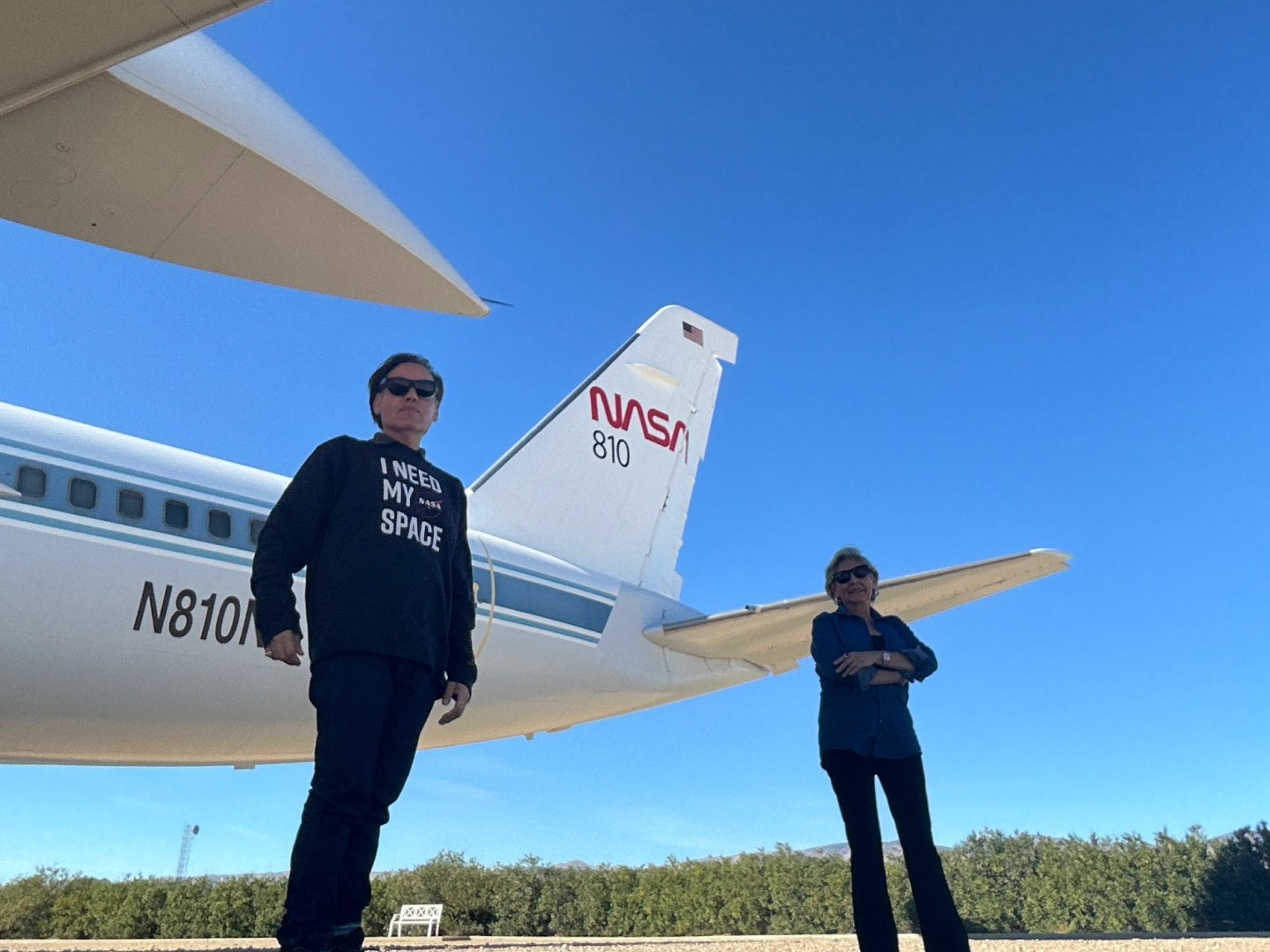
Notes from the co-founders
Some windows close. One of the deliveries tracked in these pages will not happen on the schedule it was announced on, and a depot that sat at the center of that plan has not yet flown. We report it plainly, because a briefing carrying only good news is marketing.
The more useful item this week is a federal agency publishing a specific list of supply-chain constraints affecting its lunar program. A published constraint is evidence of an identified industrial-base concern, not necessarily a funded requirement. If any line on that list describes what your shop already does, that is the conversation worth starting this week.
One capability card, from every member company, to Diego F. Padilla at diego@rakarinc.com, by Tuesday, 1 September 2026, 5:00 p.m. PT. One page: certifications held with expiry dates, processes performed in-house, maximum part envelope, current lead time, and one named federal agency or prime contractor for which you are already an approved supplier. No brochure, no capabilities deck, no company history.
Cards received before the monthly AMA are reviewed on that call; cards arriving after it are worked in the cycle that follows. They are read against the solicitation language in Standing Watch, and where a relevant and consenting contact exists the cluster offers a named introduction. Cards not received are not matched. That is the entire mechanism.
Five signals, one supply chain
Five federal windows, taken together, describe one thing: where the lunar program has run out of qualified suppliers rather than out of money. The gaps NASA has put on the public record are manufacturing gaps, and they are addressable from California.
ONE CLPS 2.0 closed on 30 June. Ten billion dollars not-to-exceed, rising to fifteen if NASA extends the ordering period to fifteen years. Prime teams are now fixed; sub-tier positions are not.
TWO The Space Force has moved orbital logistics from study to flight. Up to $20 million is anticipated for the In-Domain Orbital Logistics Challenge, and $76.3 million is already contracted across three servicing vehicles.
THREE The annual SBIR cycle is gone. A rolling Broad Agency Announcement runs to 30 September 2027, ceilings are up by half to $225,000 and $1,275,000, and appendices open and close inside about four weeks.
FOUR A prime that was private is now public. Supplier terms move onto a quarterly rhythm rather than a program rhythm, and a prime holding traded equity has a currency for acquisitions it did not have before.
FIVE NASA has published its own supply-chain constraints by name: propellant tank domes, isolation valves, high-thrust hypergolics, large-scale bespoke welding, heat pipes, radiation-hardened electronics. Not one of them requires building a spacecraft.
Three of the five federal windows in this issue closed within nine weeks of each other, and the publication is not aware of a coordinated response submitted through the cluster. The Teaming Desk and the ask below exist so the next one does not pass the same way.
Framing figure — Mae Jemison
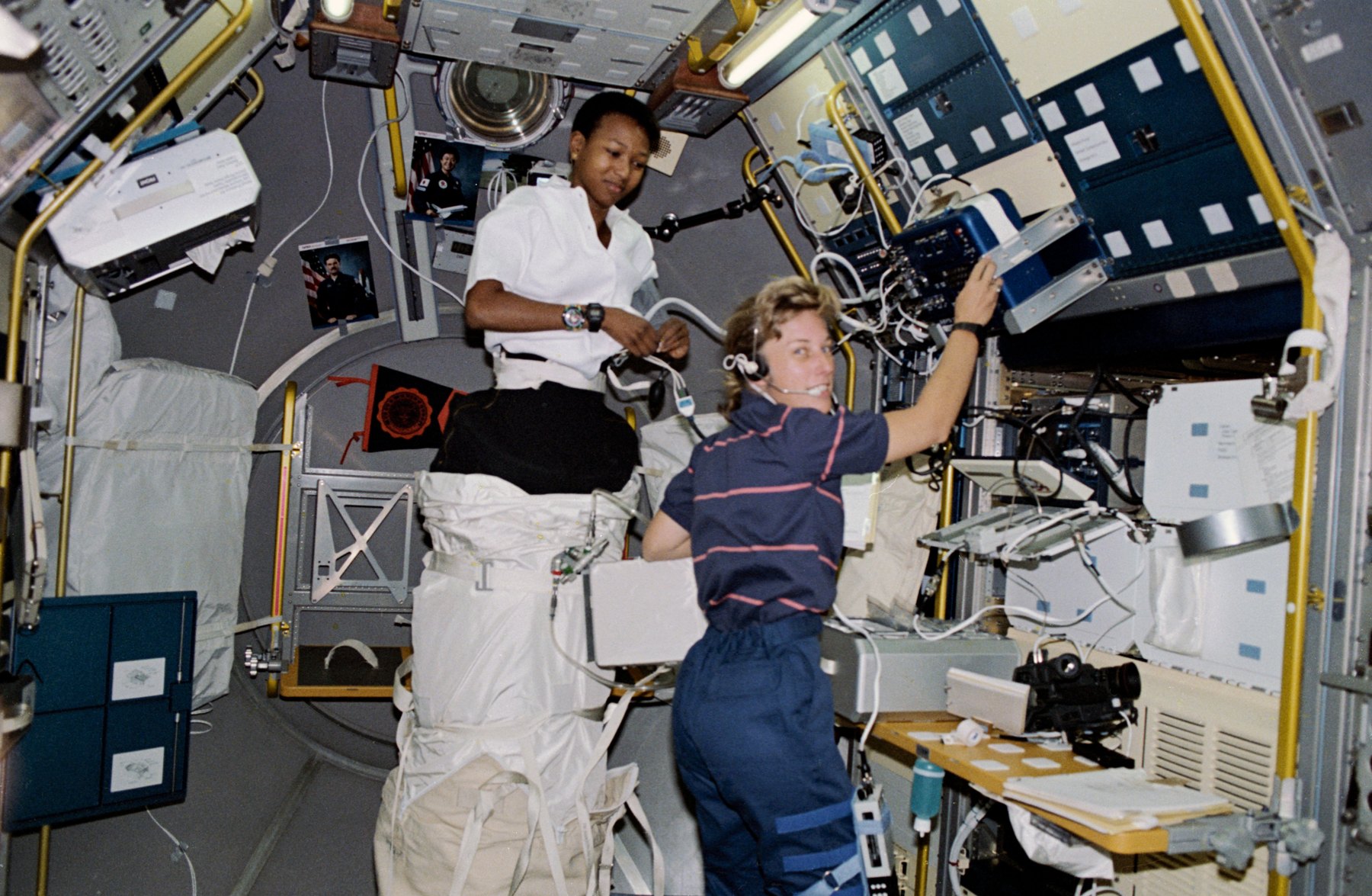
Mae Jemison graduated from high school at sixteen and attended Stanford on a four-year National Achievement Scholarship, took a BS in chemical engineering and a BA in African and Afro-American studies at Stanford, and earned her medical degree at Cornell University Medical College in 1981. She practised as a general practitioner in Los Angeles, then served as a Peace Corps medical officer for Sierra Leone and Liberia in West Africa. NASA selected her as an astronaut candidate in 1987. On 12 September 1992 she launched aboard Endeavour on STS-47, the Spacelab-J mission flown jointly with Japan's National Space Development Agency, working as a science mission specialist on space motion sickness, frog fertilisation and bone loss, and serving as co-investigator on the bone cell experiment.
The Space Supply Chain: five signals
Issue 007 examines each of these five signals in detail.
One — The CLPS 2.0 window has closed
Proposals were due no later than 30 June 2026, 1:00 p.m. CDT, submitted through NASA's Enterprise File Sharing and Sync Box. The prime proposal deadline has passed. What matters now is less who can bid than who ended up on which team, though sub-tier changes remain possible.
The instrument is Solicitation 80JSC026R0015, carrying a ceiling of $10 billion not-to-exceed, rising to as much as $15 billion should NASA exercise its option to extend the ordering period to fifteen years. Task orders will be issued firm-fixed-price, and some will require personnel and facilities cleared to TS/SCI — defined at task-order level rather than in the base contract. The contracting officer is Joshua D. Smith at Johnson Space Center.
NASA ran the pre-proposal engagement narrowly: one-on-one meetings held from 21 through 23 April 2026, held in person only in Cleveland, Ohio, with no virtual participation option. Teams that sent someone to Ohio in April were reading the requirement early.
At least one self-identified offeror is public. Astrotech Corporation stated on 30 June that it had submitted a Phase 1 proposal seeking approximately $20 million in non-dilutive NASA funding for an initial-stage lunar technology demonstration program. As of 28 July 2026, other offerors had not publicly identified themselves; CLPS 2.0, which is unrestricted among United States commercial providers but closed to foreign vendors under 51 U.S.C. § 50131 and a majority-domestic-content rule, targets new contract awards by the end of Government Fiscal Year 2026.
The reading for California suppliers: prime teams are fixed, sub-tier positions are not. Cluster assessment, unverified: the period between base-contract award and initial task-order execution is likely to offer the strongest early opportunity for sub-tier positioning. Companies meeting the relevant prime’s quality, export-control and heritage requirements should be identifying which of the named bidders lacks a qualified source in their process, not waiting for a solicitation that has already run.
Two — Orbital warehouses, depots and tugs
The Space Force has moved orbital logistics from studies into funded challenges and flight demonstrations. Space Systems Command and SpaceWERX are launching an In-Domain Orbital Logistics Challenge to find and advance commercial technologies to sustain satellites, with up to $20 million anticipated to extend the joint logistics enterprise from the ground into space. The multi-phase challenge targets five areas: orbital warehousing, propellant management, orbital transfer vehicles, distribution network mechanics, and reusability, repairability and refuelability. An open solicitation for Small Business Innovation Research proposals was expected during summer 2026, with the program structured around design sprints, tabletop exercises and prototype demonstrations.
The flight hardware is close behind, and it is already priced. Astroscale U.S. holds a $25.5 million Space Systems Command contract for the Provisioner servicing vehicle — a roughly 300-kilogram ESPA-class spacecraft carrying hydrazine, to which the company added about $12 million of its own money. The Defense Innovation Unit awarded $13.3 million for Orbit Fab's depot. Starfish Space holds $37.5 million for the Otter tug. Press reporting indicates all three are manifested on USSF-23 for geostationary deployment in 2027 for two separate demonstrations — one testing satellite refuelling, the other testing whether a servicing vehicle can dock with and manoeuvre another spacecraft. Both missions are expected to be ready for launch by the end of summer 2026 and will fly on a United Launch Alliance Vulcan, with launch expected in early 2027.
The budget picture is the part suppliers should read carefully, because it explains the shape of the opportunity. The Space Force requested no funding for on-orbit servicing, mobility and logistics in fiscal 2027, though Congress appropriated a total of $29 million across fiscal 2025 and 2026. That is a demonstration budget, not a production budget. A far larger program of record sits alongside it, though its budget is not an orbital-logistics procurement pool: the fiscal 2027 future years defense plan contains more than $2.7 billion for RG-XX, including $355 million in fiscal 2027, with the RG-XX satellites to have on-orbit refuelling.
Read as a manufacturing problem rather than a space-company problem, this is a bill of materials for cryogenic and hypergolic fluid transfer: sealing systems that survive long-duration storage, thermal isolation, valve and coupling bodies held to interface tolerance, and metrology capable of certifying all of it before flight. The resulting hardware requirements encompass precision machining, thermoset and composite structures, and connector work. None of it requires building an entire spacecraft.
Three — The SBIR clock now runs on appendices, not one annual cycle
On 17 April 2026 NASA released a new SBIR/STTR Broad Agency Announcement valid through 30 September 2027, ending the practice of issuing one annual Phase I solicitation in January followed by a second in summer, and replacing the cycle with a continuous BAA under which topic subsets — appendices — release on a rolling basis as agency needs evolve. The BAA does not itself contain topics; it sets the program structure, requirements and evaluation criteria governing all subsequent opportunities.
Award ceilings rose with the structure. Maximum values increased by 50 percent, to $225,000 for Phase I and $1,275,000 for Phase II, against a legacy structure of $150,000 and $850,000. Read the fine print on that increase: Technical and Business Assistance funding — $6,500 at Phase I, $50,000 at Phase II — is now counted inside those ceilings rather than added on top. Phase I SBIR awards run six months; Phase I STTR awards run thirteen. NASA expects two to three appendices per fiscal year and will not accept more than two proposal packages from any one offeror for a given funding opportunity, with the limit resetting at each appendix.
One correction to the way this change is being reported, including inside the cluster: the deadlines have not disappeared. The first appendices closed on 21 May 2026 at 5:00 p.m. ET, roughly a month after opening. What changed is that the windows are no longer annual, no longer announced far ahead, and no longer survive a quarterly review cycle.
The operational consequence is straightforward and unwelcome for small teams: opportunity tracking is now a standing function rather than a first-quarter exercise. A company that checks quarterly will miss appendices entirely. Registration is a prerequisite, not a formality — active SAM.gov registration with a Unique Entity Identifier is required at submission and at award, alongside SBIR Company Registry registration and NAICS 541713 or 541715 at time of award. As of 28 July 2026, the companies best positioned under this model were the companies that hold a standing proposal skeleton and can populate it inside a four-week window.
Four — After the IPO
SpaceX listed on Nasdaq under the ticker SPCX on 12 June 2026, priced at $135 a share, closing its first session up roughly nineteen percent at a market value above $2 trillion. The tape is the financial press's business. The consequence for a sub-tier supplier is ours.
A privately held prime negotiates supplier terms in private. A publicly traded one faces recurring scrutiny of cost of revenue, gross margin, working capital and supplier concentration, ask about on calls, and expect to see improve. Every sub-tier supplier to a publicly traded prime should assume its terms are now visible as an aggregate line and are subject to pressure on a quarterly rhythm rather than a program rhythm. Payment terms, audit exposure and disclosure timing all move onto that clock.
The second-order effect runs the other way, and it is the more interesting one. Public equity gives a prime a currency for acquisitions it did not previously have. For a qualified small manufacturer with certifications a prime cannot buy off the shelf, the relevant question stops being whether anyone will ever pay for the qualification and becomes who the first serious buyer is, and whether the answer is a customer, a competitor, or a financial sponsor consolidating a fragmented tier. Companies that have never modelled themselves as an acquisition target should model it now, because SpaceX now has publicly traded equity and substantial new capital.
Five — Moon Base, and the list NASA published
NASA’s Moon Base initiative was announced at NASA's "Ignition" event on 24 March 2026, where the agency set out a phased approach to establishing a lunar base and released a series of Requests for Information and Requests for Proposals to begin advancing development.
One of those instruments matters more to this readership than all the rest, and its window has also closed. NASA's Request for Information on Capability Demonstrations and Supply Chain Challenges for NASA Moon Base Development ran to 30 April 2026, 11:59 p.m. EST, extended by amendment from 23 April. It sought hardware that could be repurposed, or built fast enough, to fly demonstrations on the lunar surface within two to four years, integrated onto CLPS-class landers and LTV-class rovers, in support of NASA’s phased objective to begin early habitation during 2029–2032 and build toward sustained presence thereafter.
Read the notice for what the agency wrote down about itself. NASA listed its own supply-chain challenge areas by name:
- Propellant tank dome manufacturing
- Isolation and control valves, and actuators
- High-thrust hypergolic engines, excluding attitude and reaction control systems
- Large-scale, bespoke welding
- Heat pipes
- Radiation-hardened electronics
And its test-facility constraints:
- Hypergolic test stands capable of altitude testing
- Commercial test houses where DPAS priority demand takes precedence over NASA programs
- NASA facility scheduling that deprioritises lower-ranked programs
- Too few facilities able to run a full acceptance-test campaign
A federal agency naming supply-chain challenges in the title of a lunar solicitation is not routine market research. It is a published account of where the agency reports its supply chain is constrained. Every line above is a machining, forming, welding, sealing, electronics or test problem. Not one of them requires building a spacecraft.
The demand signal behind it is already contracted. NASA has awarded Astrolab $219 million and Lunar Outpost $220 million for the first phase of lunar terrain vehicles, under Phase 1 High Achievability Mission task orders of the Lunar Terrain Vehicle Services contract — firm-fixed-price, performance-based milestones which NASA describes as supporting its objective of crewed and uncrewed surface mobility by 2028. Moon Base I is targeted for launch no earlier than autumn 2026 on Blue Origin's Blue Moon Mark 1 Endurance lander, landing on the Shackleton Connecting Ridge; Moon Base II will deliver more than 1,100 pounds of cargo on Astrobotic's Griffin lander, including Astrolab's FLIP rover, to mature mobility systems informing future LTV operations.
And the task orders keep coming. Astrobotic announced on 30 June 2026 that it had been selected to deliver a suite of agency payloads to the lunar surface under CLPS in support of Moon Base, flying two Peregrine landers by the end of 2028, each mission carrying three NASA-sponsored payloads to a landing site near the Gruithuisen Domes.
FIELD SIGNAL / IN-DOMAIN LOGISTICS“…in-domain logistics capability that delivers bulk and retail propellant, spares, inspection, and repair…”
— COL. SCOTT CARSTETTER, DIRECTOR OF SERVICING, MOBILITY AND LOGISTICS, SPACE ACCESS PORTFOLIO, SPACE SYSTEMS COMMAND · STATEMENT, 20 MAY 2026 · REPORTED BY SPACENEWS
Teaming Desk
Six of the entries below are not our assessment of where the gaps are. They are NASA's, taken verbatim from the supply-chain challenge list in the Moon Base RFI. Members who perform any of this work should reply to this issue. We are not asking what you would like to build. We are asking what you have already been qualified to build, and for whom.
Sought — propellant tank dome manufacturing. Large-diameter forming, spin-forming or hydroforming capacity, weld-prep and dimensional verification of dome sections.
Sought — isolation and control valves, and actuators. Valve bodies, seats, poppets, actuator housings held to interface tolerance, with cleanliness and leak-rate verification.
Sought — high-thrust hypergolic engine components, excluding attitude and reaction control. Injector work, chamber and nozzle machining, materials compatible with hypergolic propellants.
Sought — large-scale, bespoke welding. Certified welders and procedures for one-off, large-envelope structures, with NDT and traceability.
Sought — heat pipes. Wick structures, envelope forming, charging and hermetic sealing, thermal-vacuum verification.
Sought — radiation-hardened electronics. Component sourcing, hardened assembly, screening and qualification.
Sought — test capacity, urgently. Altitude-capable hypergolic test stands, and any facility able to run a full acceptance-test campaign without queueing behind a higher-priority program. NASA reports constrained capacity in both.
·Offered — qualification and certification support. Cluster members with AS9100-D and ITAR registration capable of standing in as a qualified source for teams that possess a technology but not a compliant production route.
·Offered — flight-test, propulsion-test and integration space. See the member profile below.
Electromancer Space Corporation
Woodland Hills, California developer of active spacecraft survivability technology for the near-Earth radiation environment, working on methods of monitoring and modulating near-satellite plasmas to shield assets during severe space-weather events.
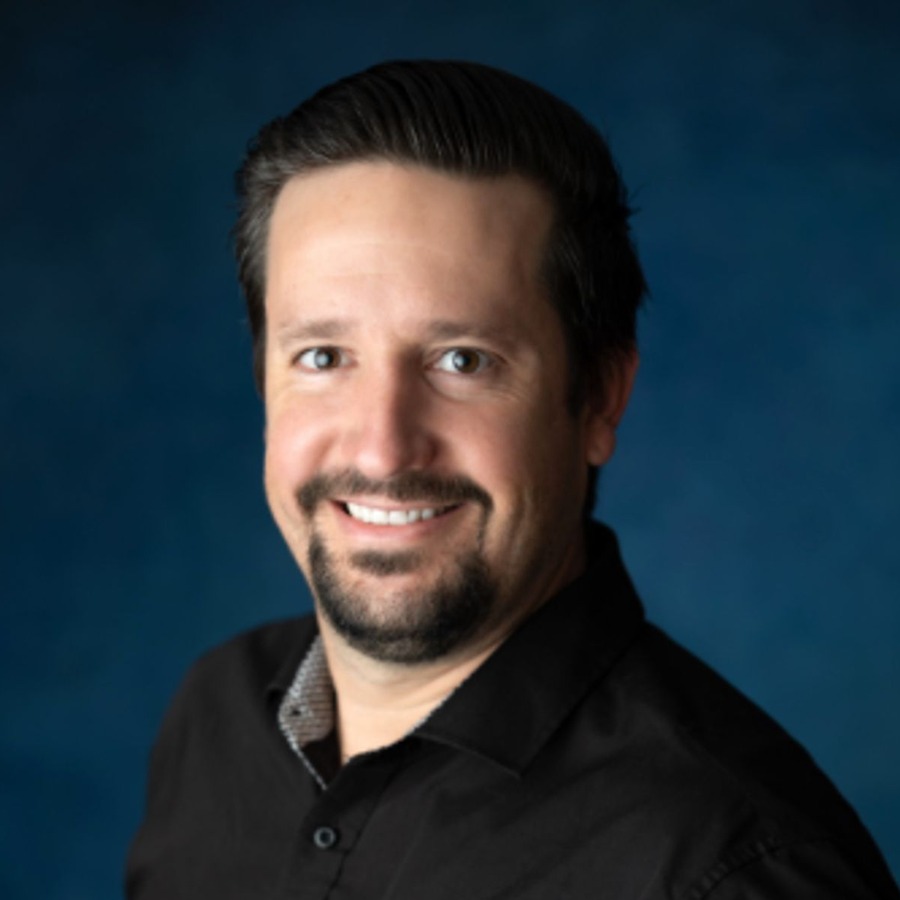
Electromancer Space Corporation describes its work as the advancement of spacecraft adaptability and survivability technologies in the near-Earth space radiation environment. Its stated core mission is to innovate methods of monitoring and modulating near-satellite plasmas for shielding, resilience and prolonged space operations, and to safeguard assets during severe space-weather events, including the aftermaths of high-altitude nuclear explosions. The dual-use framework it names is TLALOC, the space-based non-thermal accelerator for orbital capabilities, which actively transmits high-powered very-low-frequency waves to interact with charged particles in the ionosphere, the radiation belts and the interplanetary magnetic field, in order to regulate spacecraft charging, shield sensitive assets from high-energy plasma, and perform cold-plasma, wave-growth and radiation-belt-remediation activities. On LinkedIn the company describes the same work as advanced active radiation-shielding technologies for the most extreme events in space.
Every constraint named in this issue is a hardware constraint: a part that must survive an environment before it can be qualified for it. Radiation and charging tolerance is one of the environments a Californian precision supplier is asked to demonstrate against, and it is one of the hardest to test for on a small company’s own budget. A member developing active mitigation at the spacecraft level is therefore a teaming counterpart rather than a competitor: it needs enclosures, feedthroughs, deployable structures, antenna hardware and precision machined assemblies built to a documented process, and cluster members hold the AS9100-D and ITAR positions that turn a technology into a compliant production path. Electromancer is also inside Los Angeles County, which keeps the supply line short.
This profile prints what the company states about its own work. Corrections and additions from the company are welcome and will be printed in the following issue.
Capital Flows
Where committed federal money moved between 1 June and 28 July 2026, and what it buys downstream.
Bars are proportional. The RG-XX lines are budget request and future-years projection, not awarded money. SML is appropriated. The orbital-logistics line is contracted hardware, and it is the smallest bar on the page — which is the point this issue makes.
$219 million to Astrolab for the CLV-1 crewed vehicle and $220 million to Lunar Outpost for the Pegasus rover is the largest near-term signal, because firm-fixed-price mobility hardware converts directly into machined and molded part demand on a fixed schedule. Blue Origin received an initial award of $188 million, with an option period worth a further $280.4 million, to deliver both. The three Moon Base awards with disclosed values, announced on 26 May, total $627 million, or $907.4 million counting Blue Origin’s option period. Firefly’s award value has not been published.
The orbital logistics demonstrations are smaller and qualify a supply chain that does not yet exist at scale: $25.5 million to Astroscale U.S., $13.3 million to Orbit Fab for the depot, $37.5 million to Starfish Space for the tug. Note the ratio — roughly $76 million of contracted hardware against the $2.7 billion sitting behind it.
The structural number is elsewhere. More than $2.7 billion sits in the fiscal 2027 future years defense plan for RG-XX, including $355 million in fiscal 2027 — against a total of $29 million appropriated for on-orbit servicing, mobility and logistics across fiscal 2025 and 2026. Roughly ninety to one — though the two lines are not like-for-like, setting a full future-years plan against two years of a separate funding line. Suppliers chasing the demonstration line are competing for a small pool; the qualification earned there may provide relevant heritage, but it does not guarantee access to RG-XX.
On the delivery side, NASA's Johnson Space Center notified industry of its intent to issue a sole-source modification raising the cumulative CLPS contract value from $2.6 billion to $4.2 billion to ensure continuity of services. Consolidation is proceeding alongside it: Astrobotic announced a definitive agreement to be acquired by Voyager Technologies on 2 June 2026; the acquisition closed on 13 July 2026 and the business now operates as Voyager Lunar Systems.
Tuesday, 1 September 2026
11:00 AM Pacific · 45 minutes · in person & virtual
Ask Me Anything. Direct engagement with the cluster co-founders on programs, teaming, and the California space supply chain. Open to entrepreneurs, engineers, researchers, and anyone working in or near the space economy.
1680 Universe Cir
Oxnard, California 93033
Cadence · first Tuesday of every month · 11:00 AM Pacific · recurring. Capability cards submitted by 5:00 PM Pacific the day of the call are worked in the cycle that follows. By-Laws & Capability Statement at spacereturn.org.
Build the cluster with us.
SpaceReturn///// the California Space Cluster is a membership body of California space and aerospace manufacturers, operators, test facilities and service providers. Membership enquiries: diego@rakarinc.com.
Linked public record
- ESSCA II, Solicitation 80MSFC26R0002 — SAM.gov
- CLPS 2.0, Solicitation 80JSC026R0015 — SAM.gov
- CLPS 2.0 program page — NASA JSC
- Moon Base supply chain RFI — SAM.gov
- Moon Base program — NASA
- Moon Base rovers, landers, missions update, 26 May 2026 — NASA
- Building the Moon Base, Ignition event document, 24 March 2026 — NASA
- NASA SBIR/STTR Program Year 2026 information hub — NASA
- In-Domain Orbital Logistics Challenge — Space Systems Command
- Space Force 2027 in-space refuelling and servicing demonstrations — SpaceNews, 20 May 2026
- Astrobotic Moon Base task orders, 30 June 2026
- Astrotech CLPS2 proposal, 30 June 2026
- CLPS ceiling modification to $4.2B — GovConWire
Member profile — Electromancer Space Corporation
Method & colophon
Figures are drawn from primary records wherever a primary record exists — a solicitation notice, an appropriations document, a regulatory filing or an official release — and from identified secondary reporting where one does not. Every source is linked in the column alongside. Where two sources disagree, the disagreement is printed rather than resolved silently. Conclusions the record does not itself state are hedged, or marked as cluster assessment.
- Published by
- SpaceReturn///// The California Space Cluster
- Co-publishers
- Theresa Padilla-Chaparro · Diego Padilla
- Compiled from
- Primary records and identified reporting, linked alongside
- Member contributions
- None in this issue — submissions welcome
- Corrections
- info@spacereturn.org
- Dateline
- Saturday, 25 July 2026 · Oxnard, California
Use this briefing.
Forward it to one supplier who is not yet a member.
Member capability card. Standing module. Members may submit or update a capability card at any time; the one-page format set out above is the current standard.
Mailing address: *|LIST:ADDRESS|*
The Space Observer and its contents are sponsored by Rakar, Incorporated. To place advertising or sponsor a section, contact marketing@rakarinc.com. Public-record items are linked to open agency or publisher postings. Member-private items require express permission before publication. This briefing is informational only and is not legal, investment, export-control or procurement advice; verify all deadlines, eligibility and solicitation terms with the issuing authority before acting. © 2026 SpaceReturn///// The California Space Cluster.